
Treks by
May to October is ideal for visiting Budha Madmaheshwar. The trail remains closed during winter (Nov–Apr) due to heavy snowfall, but it is spiritually active during that time as the idol is kept here.
By Road: Reach Ransi Village via Ukhimath (from Rudraprayag/Kedarnath route). Trek Route: Ransi → Gondar (4 km) Gondar → Bantoli → Nanu → Madmaheshwar (16–18 km trek total) Madmaheshwar → Budha Madmaheshwar (2 km uphill) By Air: Nearest airport is Jolly Grant Airport, Dehradun (approx. 235 km). By Rail: Nearest railway station is Rishikesh/Haridwar, then taxi to Ukhimath → Ransi.
{}
3,350 meters
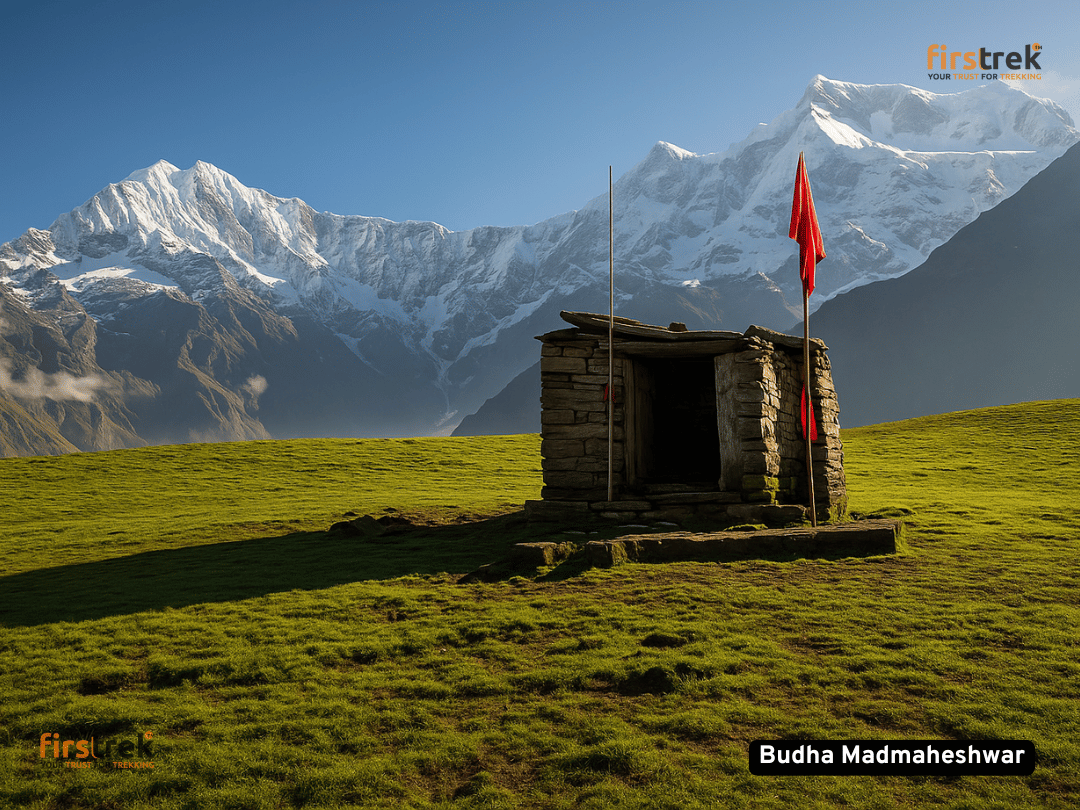
Budha Madmaheshwar is a sacred high-altitude temple located at an elevation of approximately 3,350 meters in the Rudraprayag district of Uttarakhand, India. Often referred to as the ancient or original Madmaheshwar, it is situated about 2 km uphill trek from the more popular Madmaheshwar Temple, one of the Panch Kedar shrines. Unlike its counterpart nestled in the lush green meadows, Budha Madmaheshwar lies in a dramatic alpine setting, surrounded by snow-laden peaks and serene silence, offering a divine spiritual experience in the lap of the Himalayas.
Budha Madmaheshwar is an ancient and spiritually potent Shiva temple located in the Rudraprayag district of Uttarakhand. Situated at a staggering altitude of around 3,350 meters, this serene shrine lies 2 kilometers uphill from Madmaheshwar, one of the sacred Panch Kedar temples.
Unlike the main Madmaheshwar temple nestled in lush meadows, Budha Madmaheshwar offers a raw and rugged Himalayan experience. Surrounded by snow-clad peaks like Chaukhamba, Kedarnath Dome, and Mandani, this shrine is revered as the original seat of Lord Shiva’s divine presence.
Budha Madmaheshwar is considered the ancient and original abode of Lord Shiva in the Madmaheshwar valley. According to legends, it was here that the divine presence of Shiva was first realized by sages and shepherds, long before the current Madmaheshwar Temple was constructed below in the valley. The site holds immense spiritual value as a Tapasthali (place of deep penance) for ancient sages, and it has remained untouched and sacred for centuries. During winter, when the lower temple becomes inaccessible due to snow, the idol from Madmaheshwar is moved to Budha Madmaheshwar, and daily worship continues here amidst the snowy silence. This practice symbolizes the continuous presence and protection of Shiva over the valley.