
Treks by
October to April: Ideal for witnessing the winter worship of Lord Kedarnath and Madhyamaheshwar March to June: Pleasant climate for exploring nearby destinations like Deoria Tal and Chopta September to November: Clear skies and post-monsoon greenery Avoid July–August: Due to heavy rainfall, landslides, and roadblocks in the region
By Road: Ukhimath is well connected by road from major towns like Rudraprayag (41 km), Kund, Guptkashi, and Chopta Direct buses and shared jeeps are available from Rishikesh, Haridwar, and Dehradun By Train: Nearest Railway Station: Rishikesh (~180 km) Taxis and buses are available from the station to Rudraprayag and onward to Ukhimath By Air: Nearest Airport: Jolly Grant Airport, Dehradun (~205 km) From the airport, taxis or buses can be taken via Rishikesh–Devprayag–Rudraprayag–Ukhimath route
{}
1,300 meters
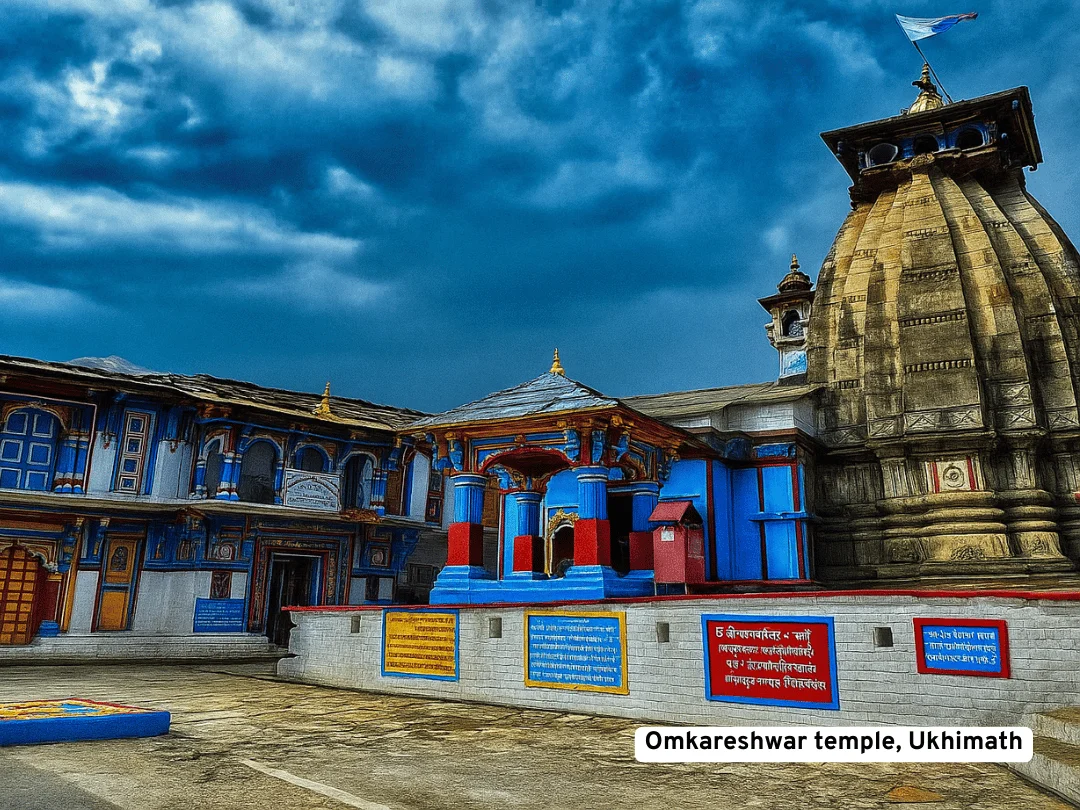
Omkareshwar Temple, located in Ukhimath, Uttarakhand, is a revered Hindu shrine dedicated to Lord Shiva. It is best known as the winter seat of Kedarnath and Madhyamaheshwar deities, which are brought here and worshipped when heavy snowfall makes those high-altitude temples inaccessible. The temple’s ancient architecture, spiritual ambiance, and mythological importance make it a key stop for pilgrims visiting the Panch Kedar. Nestled amidst the Garhwal Himalayas, Omkareshwar is not only a religious center but also a peaceful retreat with panoramic views and a deeply sacred atmosphere.
Omkareshwar Temple, located in the serene town of Ukhimath in the Rudraprayag district of Uttarakhand, is a spiritually significant shrine dedicated to Lord Shiva. It holds a special place in the hearts of devotees as the winter seat of Lord Kedarnath and Madhyamaheshwar, two of the sacred Panch Kedar temples. During the harsh winter months, when snow blocks access to high-altitude temples, the idols are ceremoniously shifted to Omkareshwar, where worship continues uninterrupted.
Omkareshwar is not just another Shiva temple—it plays a pivotal role in preserving the continuity of rituals and devotion for Kedarnath and Madhyamaheshwar. As per tradition, the Utsav Murti (festival idol) of Lord Kedarnath is brought here in November and remains till April. Daily worship, aarti, and special rituals are performed with equal reverence as at the original shrine.
This ancient temple is also associated with legends of the Mahabharata, where the Pandavas are said to have worshipped Lord Shiva in penance for their sins after the war.
Built in traditional Katyuri-style architecture, the temple is constructed from large stone blocks with beautifully carved wooden doors and a distinct Garhwali structure. The sanctum houses idols of Lord Omkareshwar (Shiva), Goddess Parvati, Mandhata, and Udhav. The surrounding complex includes smaller shrines dedicated to other deities, adding to the temple's spiritual richness.
Ukhimath is located at an altitude of approximately 1,300 meters, offering a mild climate and stunning views of snow-covered peaks like Chaukhamba, Kedarnath, and Mandani. It is often used as a base for treks to Madhyamaheshwar, Tungnath, Deoria Tal, and Chandrashila.
The village maintains a peaceful rhythm, driven by spiritual devotion and traditional Garhwali culture. During the winter, the town becomes vibrant with pilgrims, rituals, and festivals.
Omkareshwar Temple holds immense religious and historical importance in Uttarakhand’s Garhwal region. It is believed to be more than 1,000 years old, built during the reign of the Katyuri kings, known for establishing many sacred sites across the region. The temple's primary significance lies in being the winter abode of Lord Kedarnath and Madhyamaheshwar. According to Hindu tradition, during the winter months (November to April), when snow renders Kedarnath and Madhyamaheshwar temples inaccessible, their idols are brought to Omkareshwar for continued worship. Legend also connects this temple to the Mahabharata, suggesting that the Pandavas passed through this area during their journey of penance and performed rituals here.