
Treks by
October to March is ideal due to pleasant weather and festive spiritual gatherings. Avoid peak monsoon season (July–August) due to slippery walkways.
By Road: Accessible via NH-7 from Haridwar (25 km) and Dehradun (45 km). By Train: Rishikesh Railway Station (5 km away). By Air: Jolly Grant Airport, Dehradun (20 km). Take a taxi or bus to Rishikesh. From Lakshman Jhula: 2 km downstream – easily walkable or accessible via auto.
{}
340 meters
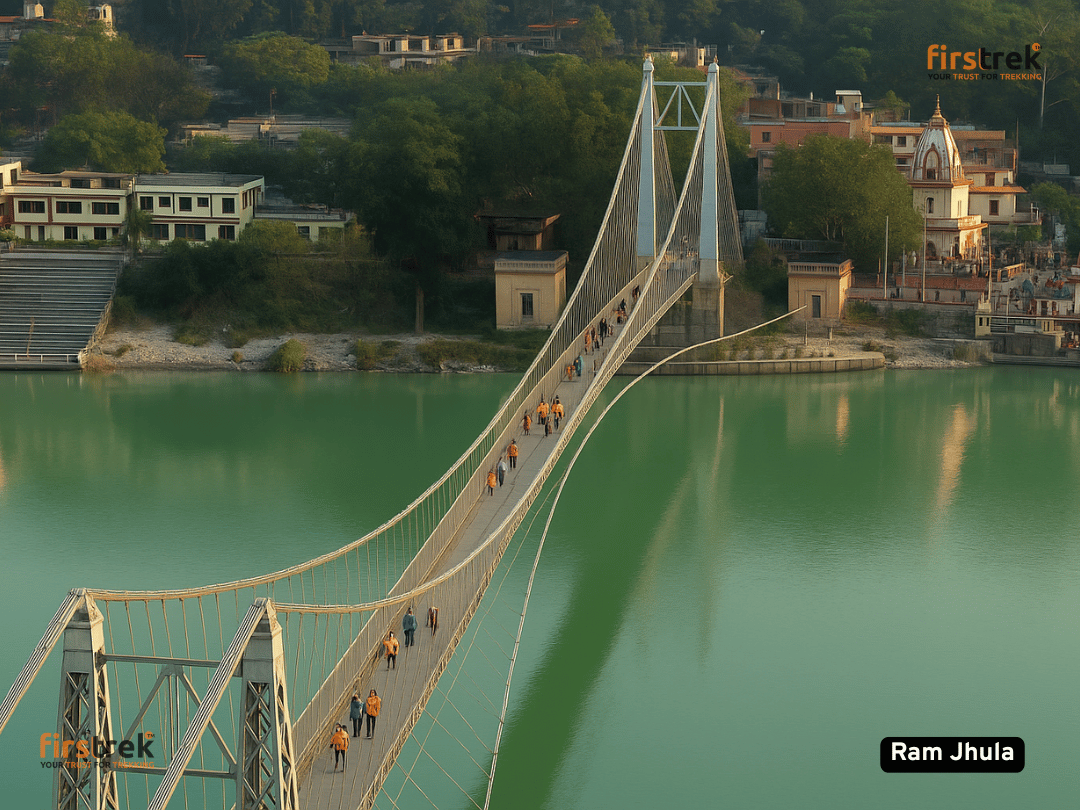
Ram Jhula is a renowned iron suspension bridge built across the holy Ganges River in Rishikesh, connecting the Sivananda Ashram (Muni Ki Reti) on the western bank to the Swarg Ashram area on the eastern side. Constructed in 1986, this iconic pedestrian bridge is a spiritual sibling of Lakshman Jhula, located just 2 km upstream. This bridge is named after Lord Rama and offers a scenic walkway flanked by temples, ashrams, and bustling spiritual life on both ends. Walking on Ram Jhula feels like floating above the sacred waters, surrounded by chanting, temple bells, and the scent of incense.
Ram Jhula is an iconic iron suspension bridge spanning the Ganges River in Rishikesh, Uttarakhand. Built in 1986, this pedestrian bridge connects the Sivananda Ashram side in Muni Ki Reti with the Swarg Ashram area, both of which are spiritual and yogic centers. Stretching 450 feet, it offers scenic views of the river, nearby temples, and the Himalayan foothills. Ram Jhula is not only an architectural marvel but also a spiritual path walked by pilgrims, saints, yogis, and tourists seeking peace, prayers, and photo moments.
Ram Jhula was constructed in 1986 as an iron suspension bridge to accommodate the spiritual traffic between eastern and western banks of Rishikesh. It serves as a modern replacement of traditional boat crossings and symbolizes the growing infrastructure of pilgrimage routes in Uttarakhand.